


[01]
Brand Strategy & Branding
Steps 01, 02 and 06: noticed, recognised, chosen again
- Strategy session and positioning
- Name and tagline
- Identity system
- Brand guidelines
Answers for
Recall and branded search

brand & product team
For companies whose brand, site and product were made by different teams. Below: how we work as one team, what you get each week, what we need from you and how you see progress.
Two weeks · the report stays with you · an honest no if we’re not the right team
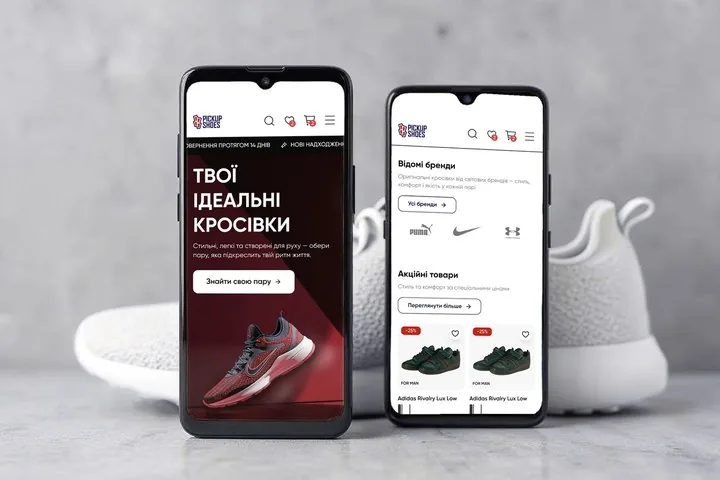
01 · Sees the brand
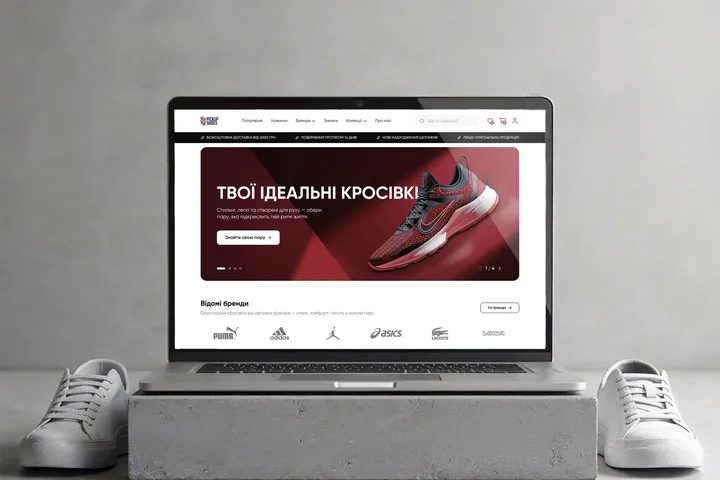
02 · Lands on the site
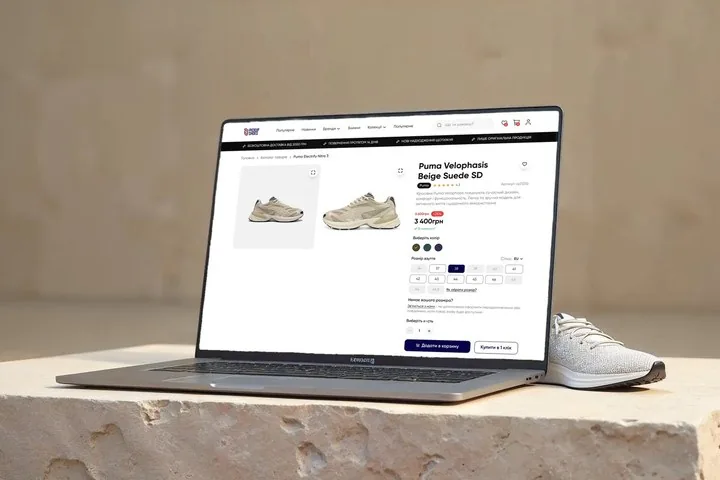
03 · Chooses a pair
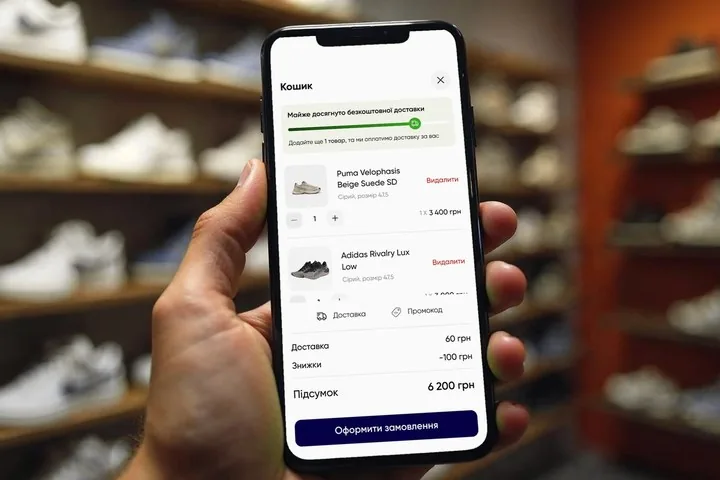
04 · Fills the cart
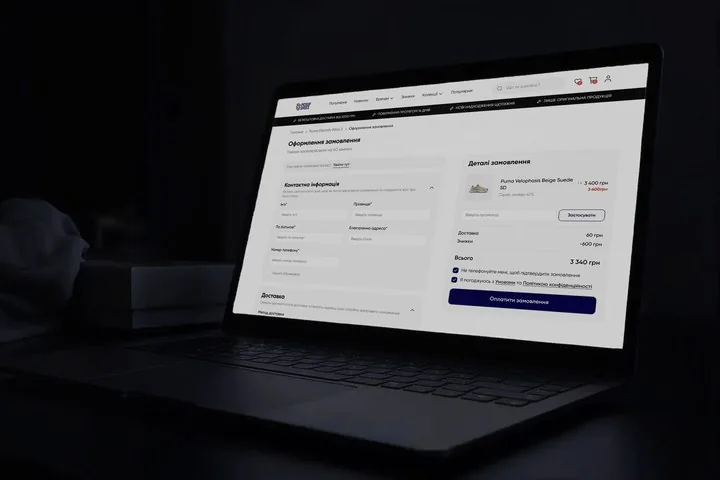
05 · Pays
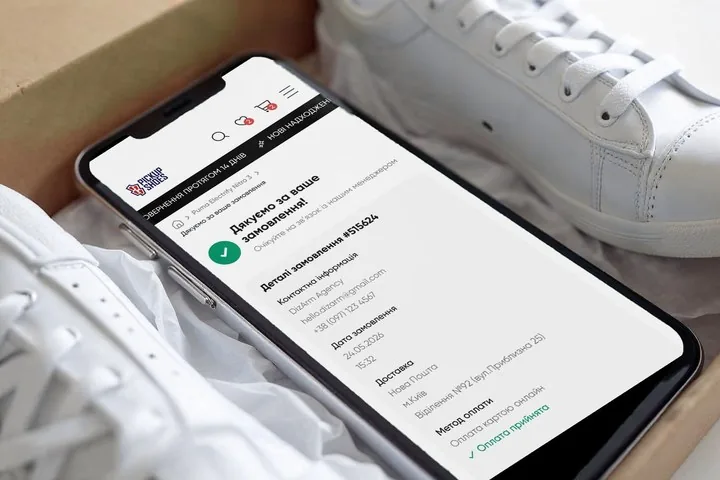
06 · Comes back
One purchase, six steps, one team. PickUpShoes: banner, home, product page, cart, checkout and the thank-you screen.One purchase, six steps, one team: PickUpShoes, from the banner to the thank-you screen.
See the caseEach team hits its own target. The customer who walks through all three rooms is nobody’s target.
[ 01 ] · the ad
Hands over the guideline, then moves on to the next client.

[ 02 ] · the site
Builds the site to the brief it was given. After launch, it is someone else’s job.
[ 03 ] · the checkout
Ships the checkout and the account on its own roadmap, in its own style.
Visitors drop off between the rooms. Whether they buy is nobody’s number, so the founder ends up owning it alone.
A company with nothing live and a company that ships every month need different work. Find yours. We confirm it in the audit, before anything is priced.We confirm your stage in the audit, before anything is priced.
An idea, maybe a name. Nothing is live yet.
What breaks
Brand and product get designed apart from day one.
Where we start
Start · 6–10 weeks
The site is up and traffic comes in. The numbers don’t move.
What breaks
Visitors drop between the ad and the checkout.
Where we start
Rebuild · product · 8–12 weeks
You moved upmarket. The brand still talks to your first customers.
What breaks
You win on price, or not at all.
Where we start
Rebuild · brand · 8–12 weeks
New releases every month and a growing team.
What breaks
Site, deck and product disagree. Every new designer redraws the look.
Where we start
Partner · monthly
So we design the brand and the screens it lives on as one job: one team, one plan, one number to answer for.
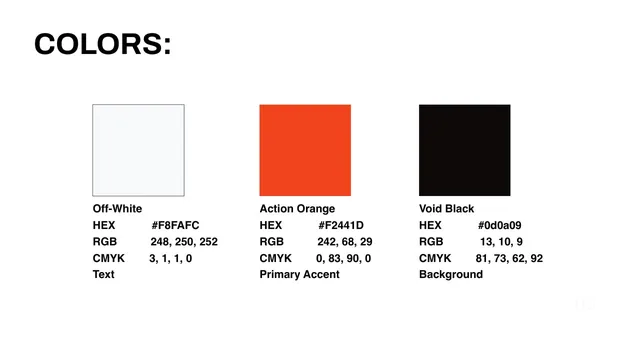



We split the work by the customer’s path, not by deliverable. Each block answers for its own number, and the design system underneath keeps all three in one style.
01 · Sees the brand
Branded search
02 · Lands on the site
Bounce rate
03 · Chooses
Product page reach
04 · Fills the cart
Add to cart
05 · Pays
Checkout completion
06 · Comes back
Repeat orders
[01]
Steps 01, 02 and 06: noticed, recognised, chosen again
Answers for
Recall and branded search
[02]
All six steps, online and offline
Answers for
Repeat orders
Page in progress
[03]
Steps 02 to 05: from landing to payment
Answers for
Stage conversion
[ + ]
Research, one design system and one set of numbers keep the three blocks in the same style and the same language.
[ + ]
Quick fixes from the audit go live while the big blocks are built: form errors, page speed, delivery info, trust signals.
Each stage ends with something that stays with you, and with your decision. The plan below is a Rebuild. Start is shorter, Partner runs month to month.This is a Rebuild; Start is shorter, Partner runs month to month.
[01]
Weeks 1–2
What is costing you customers?
Your time · Kickoff, 60 min · access in week 1
[02]
Weeks 3–5
What do we change first?
Your time · Workshop, 2 hours
[03]
Weeks 6–9
Does it work for real buyers?
Your time · Design reviews, 60 min × 2
[04]
Weeks 10–12
Can your team run it?
Your time · Final review, 60 min
[05]
Month 4–5
Did the number move?
Your time · Results call, 30 min
Mon
Sprint plan
Tasks for the week, who owns each, and what “done” means for each of them.
Mon–Fri
Async
Questions and drafts go to Slack or Telegram. We reply within one working day.
Fri
Demo
What’s done, what’s live and where the number is. Thirty minutes, recorded if you can’t join.
The work is done by two teams. Without these four, projects stall by the first review, so we agree them up front.
Kickoff sheet
DizArm × [ your company ]
Who decides
Your team · approves a direction
within a week
Our team · brings options
and a recommendation
If every review needs a committee, we plan the committee in from day one.
Access in week one

An audit without data turns into opinions.
Our number
[ Metric ], measured against [ the same period ]
Stage conversion, average order or repeat orders. You pick it before we start.
Your hours
[ N ] hours a week, plus a 30-minute demo on FridaysFriday demo
We agree the hours first and set the pace from them.
[ 01 ]
Someone who can approve a direction the same week. If every review needs a committee, we plan the committee in from day one.
[ 02 ]
Analytics, store or CMS admin, ad accounts and the current design files. An audit without data turns into opinions.
[ 03 ]
Stage conversion, average order or repeat orders. You pick it before we start, and we measure it against the same period.
[ 04 ]
Kickoff, a workshop, reviews and a short Friday demo. We agree the hours first and set the pace from them.
We’re not the right team if you need a site by Friday, choose on price alone, or can’t say who approves the work. We’ll say so on the first call.
First step · The audit
We look at your analytics, your screens and the brands your buyers compare you with, and come back with what costs you customers and the order to fix it.
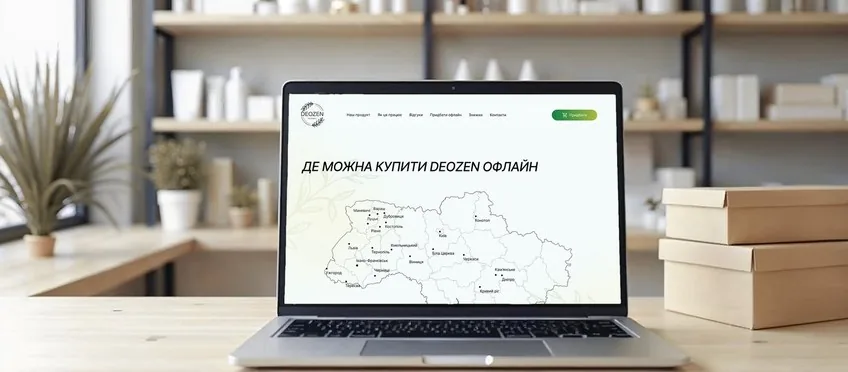
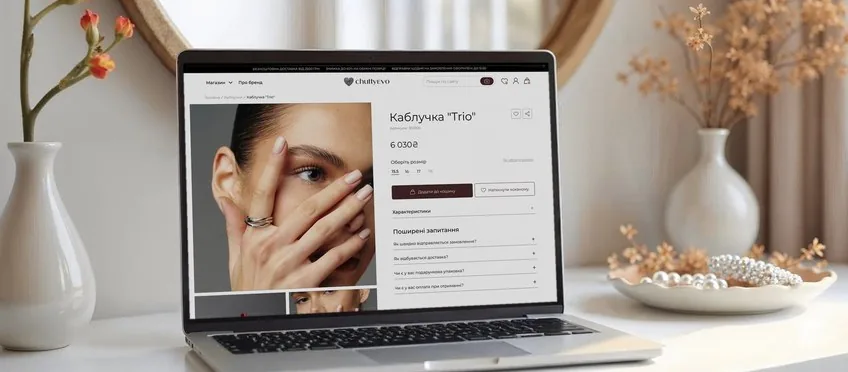
ClipSwift · DEOZEN · Tandem · PickUpShoes
Clients we can name




Clutch Special Kudos 2024 · 2025 · 2026
Projects rarely fail at launch. They fail quietly around week six, when designs sit in Figma and nobody ships them. So we check for that on purpose.




 Week 6 check · how much of this is live?
Week 1
Week 3
Week 6
Week 9
Week 12
[ 01 ]
We count how much of what we designed is live. If it’s little, we meet the person who decides that same week, with the reasons and a new plan.
[ 02 ]
Every change of direction is written down: what changed, why, and who approved it. Six months on, nobody has to remember.
[ 03 ]
A test on too little traffic is “not proven”. A screen that isn’t live isn’t “done”. A number we haven’t measured stays blank, not a guess.
One page, in the same order every week. Five minutes to read, and it answers what you would otherwise ask on a call.
Friday report
Week [ N ] of 12
01 · Done and live
Two numbers, not one: tasks we closed, and how many of them are live.
02 · Your number
Plan against fact, with the period it was measured over.
03 · Next week
What we will do, and what we need from you to do it.
[ 01 ]
Two numbers, not one: tasks we closed, and how many of them are live.
[ 02 ]
Plan against fact, with the period it was measured over. No number yet means a blank, not an estimate.
[ 03 ]
What we will do, and what we need from you to do it. Nothing arrives as a surprise on Monday.
Measured over 8 weeks against the same period before the redesign. From the TandemShop case.
81%checkout completion
+13%sessions reach a product page
If a request breaks one of these, we say so before we start, not in week eight.
[ 01 ]
Buyers judge the brand on the screen where they pay. So the team that draws the logo also designs the checkout.
[ 02 ]
Success is a metric you pick before week one, measured against the same period. Not a feeling at the final review.
[ 03 ]
Positioning before the logo, the user flow before the interface, research before both.
[ 04 ]
We look at your data and your buyers before we draw. Every recommendation names its source.
[ 05 ]
A task closes when customers can see it, not when the file is in Figma.
[ 06 ]
A Figma library, tokens, guidelines and a brand.md file your tools can read. The system keeps working after we leave.
Every row answers on its own. Open one when you want the reasoning behind it.
The audit is $[ N ] and takes two weeks. After it, the Start, Rebuild and Partner tracks are priced from the scope the audit found.
Tracks, terms and scope are on the Services page
The report and the plan stay with you. Carrying on with us is not a condition.
The audit stands on its own
The person who decides names the hours per week, and we set the sprint pace from them.
Typical sessions are in the plan above
If the problem isn’t design, we say so and tell you who can help.
An honest no, in the first reply
Every case shows behavioural numbers against the period before launch, never revenue.
TandemShop: 81% checkout completion, measured over 8 weeks
See the caseYour case doesn’t fit any of these?
Ask it directly
1111111DizArm UX/UI Agency's work improved user retention and navigation, increased brand recognition, and the client's professional presence in the market. Moreover...
Bohdan Lyshchenko
Founder at ClipSwift
DizArm UX/UI Agency's work improved user retention and navigation, increased brand recognition, and the client's professional presence in the market. Moreover...
Bohdan Lyshchenko
Founder at ClipSwift
DizArm UX/UI Agency's work improved user retention and navigation, increased brand recognition, and the client's professional presence in the market. Moreover...
Bohdan Lyshchenko
Founder at ClipSwift
DizArm UX/UI Agency's work improved user retention and navigation, increased brand recognition, and the client's professional presence in the market. Moreover...
Bohdan Lyshchenko
Founder at ClipSwift
DizArm UX/UI Agency's work improved user retention and navigation, increased brand recognition, and the client's professional presence in the market. Moreover...
Bohdan Lyshchenko
Founder at ClipSwift
Fill out the form today and get a response within 1 hour. If we miss that window, you'll receive a complimentary product audit or concept development from DizArm.

I would be happy to provide additional information about the solutions developed by our team and assist you in selecting the optimal approach.